
Pirates VR arrived to standalone VR a full year after its original PC VR release. As expected, there have been some graphical compromises to bring the game to Quest, but the overall experience remains intact.
UploadVR originally reviewed Jolly Roger on PC VR in 2025, so if you are curious about the actual game itself, you should read our review. Note, however, that the game has received significant updates since then that address some things pointed out in the review. For this article, I replayed the entire game on PC VR, followed by the Quest port, so I experienced the improvements firsthand.
Pirates VR: Jolly Roger Review – Colorful Adventure With Shallow Combat
Pirates VR: Jolly Roger presents an enjoyable lighthearted VR adventure, though it’s hampered by shallow combat.
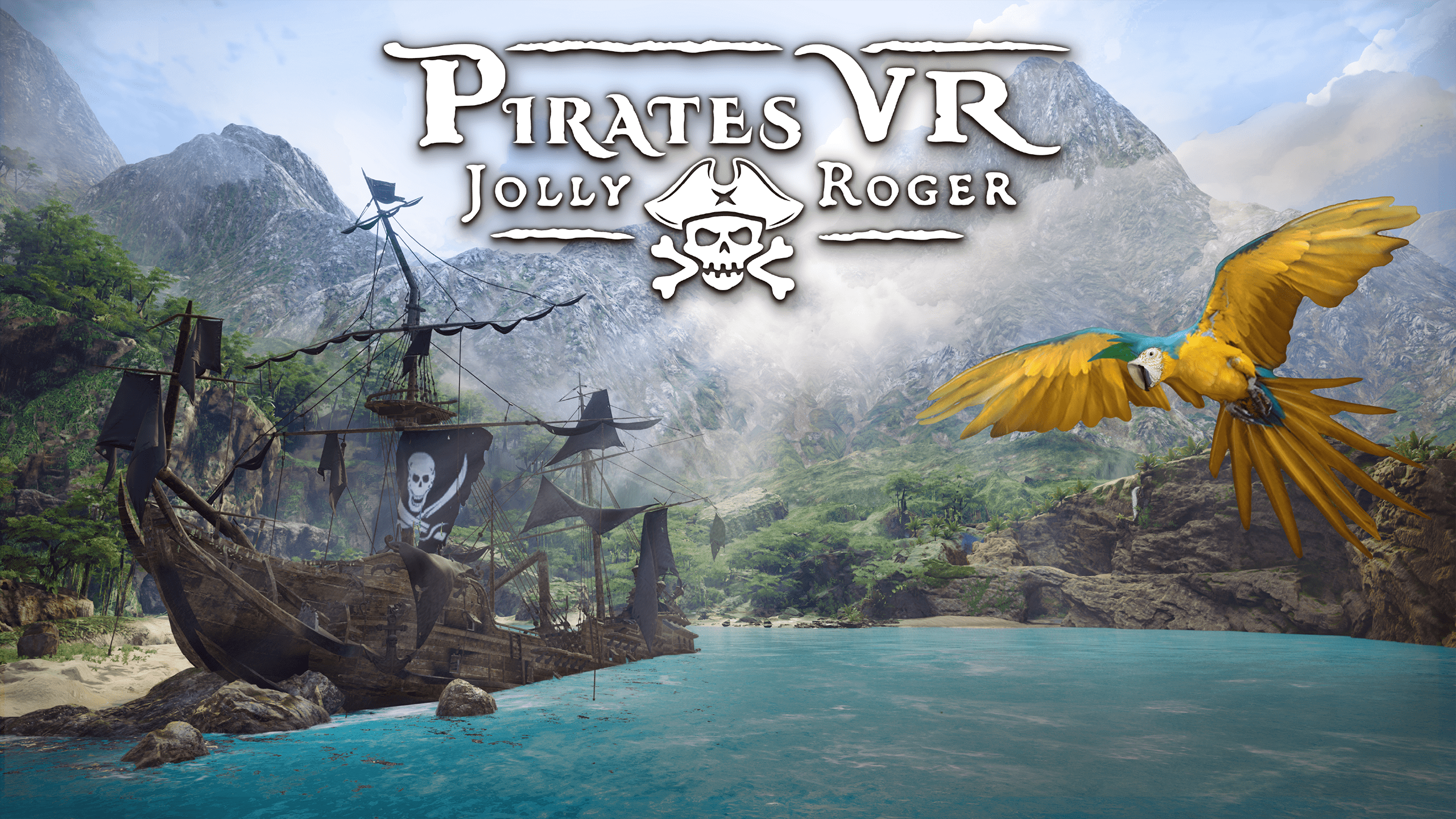
The sardonic, oftentimes annoying parrot companion’s dialogue can be toggled on or off. Frankly, this option alone is worth half a star back on the rating (I’m only half kidding). A new intro and notes scattered throughout the campaign flesh out the story a bit more by filling in the backstory of Davy Jones and a reason why the player character embarks on the quest to begin with. Motion controls have been implemented to the swimming sections, a welcome addition for immersion. Lastly, the enemy AI is stated to be improved.
My PC uses a Ryzen 5 5600X processor with 64 gigs of DDR4 RAM and an RTX 5070 Ti GPU.
I replayed the PCVR version on Steam using a Quest 3 via Virtual Desktop on the Ultra preset in VD. In game, I left the graphics on the default medium setting. The highest caused some stutters on my PC when I started recording.
For standalone, I played and recorded natively on Quest 3 with a metrics meter running to monitor framerate. This game is NOT available for Quest 2 or Quest Pro, so those were not tested.
You can find the minimum and recommended specs on the Steam page to learn more.
The Quest version uses two common standalone VR optimization methods. The first is Application Spacewarp (ASW), an optimization technique where the game renders at 36 frames per second, then the system synthesizes the missing frames to output 72 frames per second to the display. This is most noticeable in the form of micro stutters when grabbing objects. The second is fixed foveated rendering, where pixels on the periphery of the field of view are rendered at a lower resolution than the center of the view. This is noticeable if you keep your head still and move your eyes in any direction.
The aforementioned new intro is a good place to start when comparing the graphics. This scene has a pirate, the brother of Davy Jones, sending you on a quest to find the infamous pirate and his treasure. On both versions, the lone candle on the table provides some dynamic lighting. Doing something as simple as picking up a wine bottle and watching the light of the candle dance around it would’ve been unheard of for standalone a few years ago. The lamp you acquire early in the game also behaves the same way. Most of this game takes place in dark caves and dungeons and the lamp lets the developers keep dark corners dark, instead of that sort-of-dark-but-really-just-gray darkness seen in previous standalone efforts. Having said that, there is a significant difference in the lighting. The lamp on PC illuminates and casts shadows against everything while the Quest lamp is more selective.
Pirates VR: Jolly Roger PCVR vs Quest comparison
I expected the draw distance looking out to the ocean to be reduced by a heavy use of fog, but that’s not the case. The entire area is intact with a surprising amount of detail preserved. Little things, like the dust particles when grabbing a vine add to the overall experience. However, looking out to the horizon caused a major frame drop I experienced in the game, going from 72 to the low 50s. There is quite a bit of texture pop-in, but that was there with the PC version as well (especially underwater) unless the PC graphics were highest setting and even then, the odd rock or bush would still pop into view as you approached it. The level of detail and texture quality on the environment items (rocks, ground, walls, plants) have clearly been reduced, but not to the point of breaking immersion. The skeletons you spend the entire game fighting are more detailed on PC than Quest, but this didn’t really stand out until encountering the enemies wearing clothes later in the game.
Even the water (mostly) holds up. Water in general is a struggle for standalone headsets and Jolly Roger doesn’t buck that trend, but it holds up better than most Quest games. There’s an extensive stretch spent underwater about a third of the way through the game and Split Light Studio (in partnership with Incuvo) translate that well to standalone, albeit with an odd blue sheen in the distance I did not notice on PC.
Overall, this is a strong PC to standalone port. It feels more like playing a PC game on the lowest settings with reduced texture quality as opposed to past Quest ports where entire assets, like grass, benches, and trees are removed and draw distance is drastically reduced.
Pirates VR: Jolly Roger is available on Steam and PlayStation VR2 for $19.99, and Meta Quest 3/3S for $14.99.


